
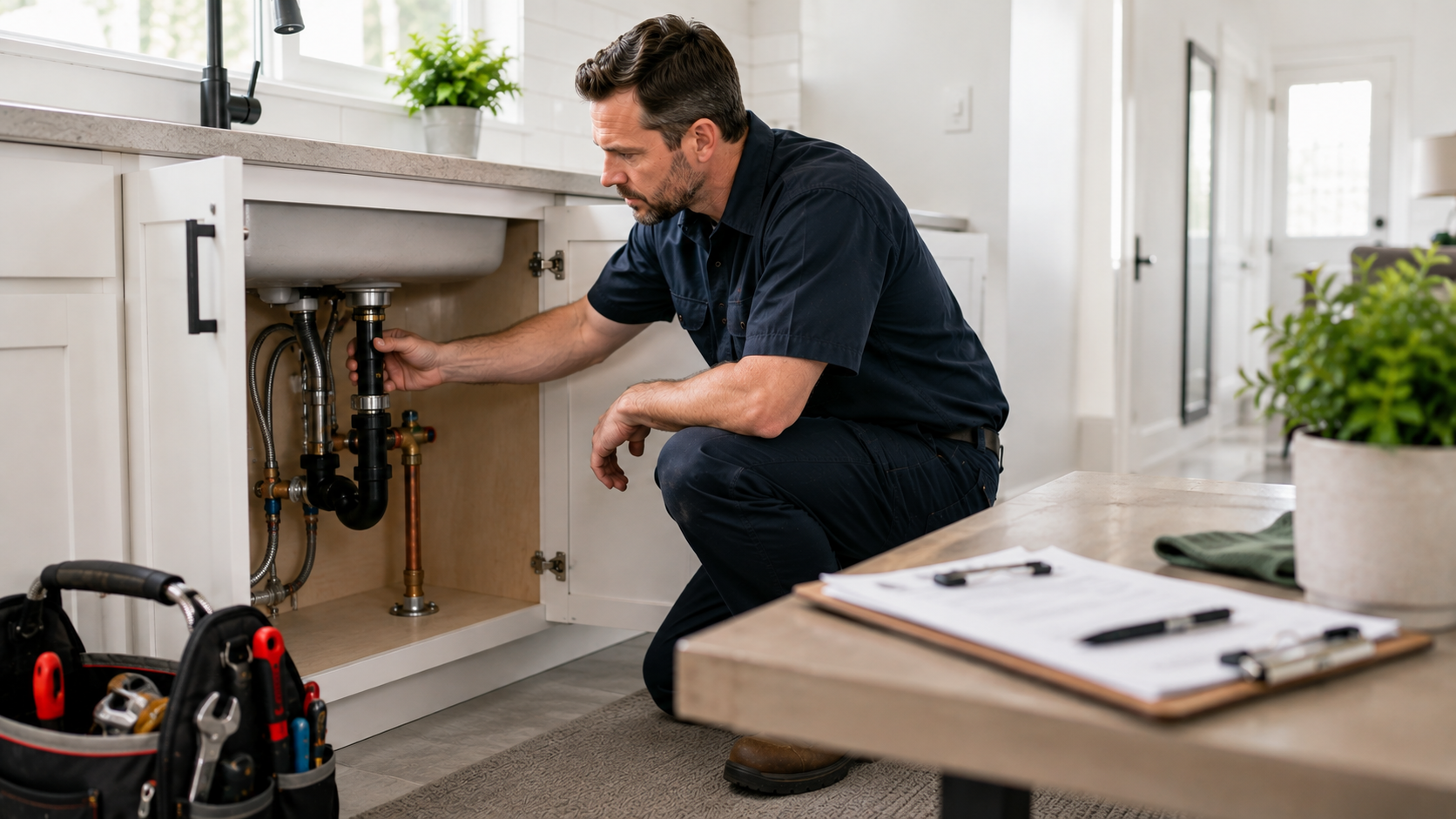
Before hiring a plumber, it helps to understand what can affect the price. According to 2026 industry pricing data, most plumbers charge between $45 and $200 per hour, with the majority of residential work falling between $80 and $130 per hour. Rates vary by experience: apprentice plumbers typically charge $45 to $70 per hour, journeyman plumbers charge $80 to $130, and master plumbers charge $120 to $200 or more.
Most plumbers also charge a separate service call or diagnostic fee of $50 to $250, which typically covers the first hour of work. Knowing what you’re paying for can make it easier to compare estimates and avoid surprises — the first step toward hiring the right plumber for the job.
Typical Cost by Job Size
Based on 2026 national cost data:
| Job Size | Typical Cost |
|---|---|
| Small repair (leaky faucet, minor clog) | $125 – $350 |
| Medium job (toilet or water heater installation) | $350 – $1,600 |
| Large job (sewer line repair, whole-house repiping) | $3,000 – $25,000+ |
| Emergency/after-hours call | $400 – $1,000 (total, including premium rates) |
These figures reflect national averages across multiple 2026 industry sources (HomeGuide, Modernize, and specialty plumbing cost guides). Emergency rates typically run 1.5 to 3 times the standard hourly rate, so if your situation allows any flexibility, waiting for a standard appointment can meaningfully reduce the cost.
Why Does Location Affect the Price So Much?
Geography is one of the biggest drivers of plumber cost. High-cost states like California and New York commonly see rates of $100 to $200 per hour, while lower-cost states can average $50 to $85 per hour. Urban markets generally run 20 to 30 percent higher than rural areas within the same state.
What Affects the Cost of a Plumber?
A plumber’s price can depend on the type of repair, how difficult the job is, where the problem is located, and whether special parts or equipment are required. Emergency calls, difficult-to-access plumbing, and jobs that require more labor can also increase the total cost.
Ask About the Service Call
Some plumbers charge a separate service or diagnostic fee before beginning the repair. Ask what the fee covers and whether it is applied toward the cost of the work. Knowing this upfront can help you compare estimates more accurately.
Parts and Labor
Ask whether the estimate includes both parts and labor. The price of a replacement part can vary significantly, and labor may depend on how difficult the repair is. A clear estimate should explain what work is included rather than giving you only one unexplained total.
Routine Plumbing vs. Emergency Service
A routine plumbing repair is usually easier to plan and price than an emergency call. If a pipe is actively leaking, a drain is backing up, or there is a risk of water damage, you may need service outside normal hours. Ask about emergency fees before approving the work when possible.
Get a Clear Estimate
For larger or less urgent repairs, ask for a written estimate before the work begins. The estimate should explain the problem, recommended work, parts, labor, service fees, and any other known charges. If the final price may change, ask how additional work will be approved. See How to Read a Plumbing Estimate for a fuller breakdown of what a good one should include.
Questions to Ask Before Hiring a Plumber
- What is the service or diagnostic fee?
- Is the estimate based on an hourly rate or a flat price?
- Are parts and labor included?
- Could additional work be required?
- How will unexpected costs be approved?
- Is the repair covered by a workmanship warranty?
- When can the work be completed?
- What payment methods do you accept?
Asking these questions before the work starts can help you understand the total cost and avoid misunderstandings about what is included.
Get More Than One Estimate
For larger plumbing projects, getting two or three estimates can help you understand whether a price is reasonable. Make sure each plumber is quoting a similar scope of work so you’re comparing similar services. For a major job like sewer line repair, this comparison matters even more.
When Should You Get a Second Opinion?
Consider another opinion when the repair is expensive, the diagnosis is unclear, or the recommended work seems much larger than the problem suggests. Another plumber may confirm the diagnosis or offer a different solution.
Watch for Red Flags
- A vague price with no explanation of the work
- Pressure to approve the job immediately
- Unexpected charges that weren’t discussed
- A recommendation for major work without a clear diagnosis
- Refusal to provide a written estimate for a larger project
Finish With the Next Step
Once you understand the problem, the plumber’s recommended solution, and the expected cost, you can decide whether to move forward — or whether it’s actually something you could handle yourself first. For larger repairs, compare estimates and make sure the work and price are clear before you approve the job.
Before You Fix, know what’s driving the cost before you approve the work.

Leave a Reply