
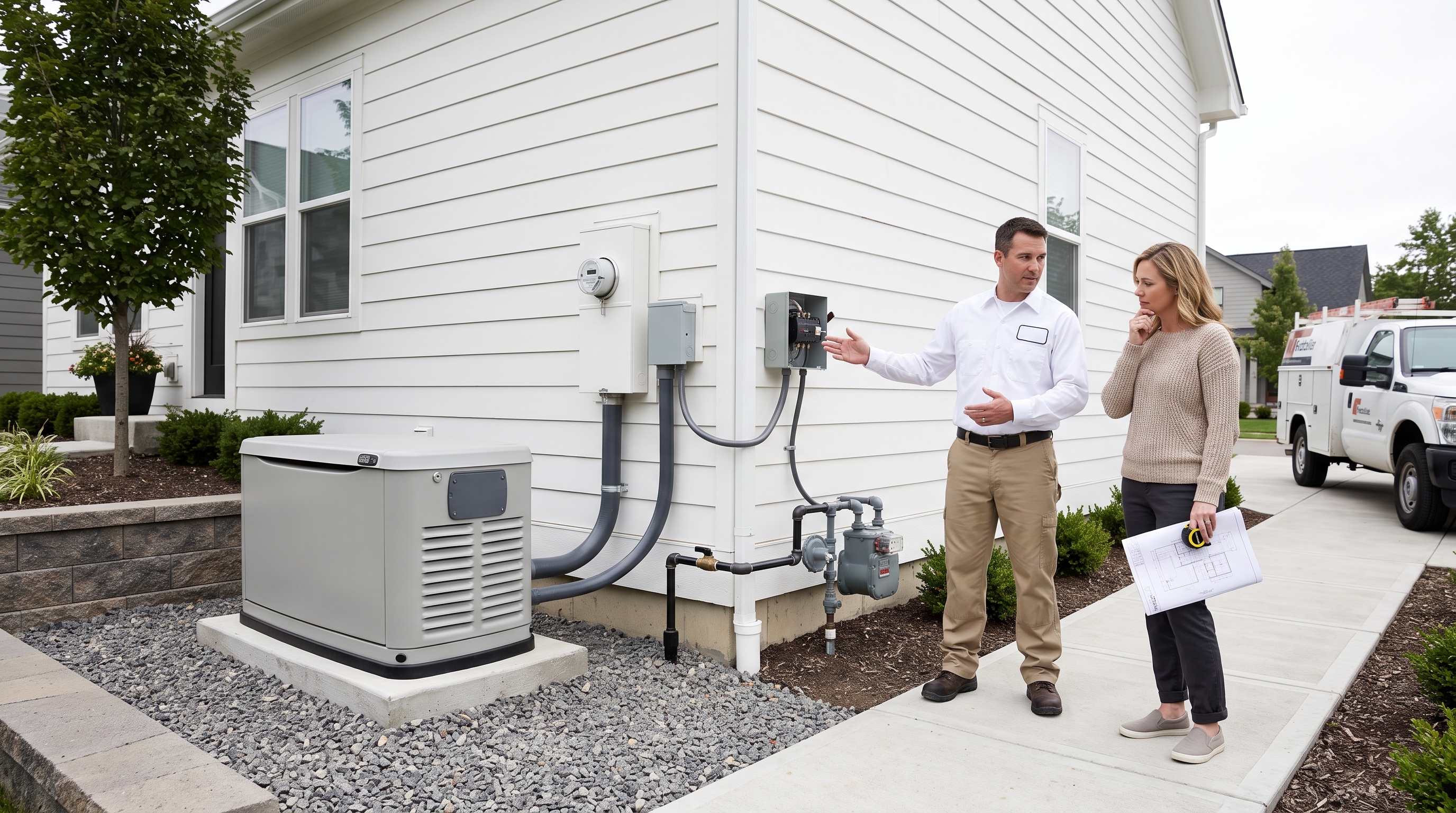
Buying a generator is only part of the expense. Installation — whether for a portable unit with a transfer switch or a full whole-house standby system — adds its own costs, and those costs can vary widely depending on what your home already has and what the installation actually requires.
Installation Costs Look Very Different for Portable vs. Standby Generators
These two categories have very different installation scopes, so it’s worth separating them clearly. If you haven’t yet decided between the two, see Portable vs Standby Generator to help you decide which fits your situation first.
Installing a Transfer Switch for a Portable Generator
According to 2026 industry cost data, transfer switch installation for a portable generator typically runs:
| Switch Type | Typical Installed Cost |
|---|---|
| Interlock kit (basic, portable-only) | $400 – $900 |
| Manual transfer switch (6–10 circuits) | $1,000 – $2,200 |
| Automatic transfer switch, 100–200A | $1,800 – $5,500 |
An interlock kit is the most affordable option and works with any portable generator, but requires manually swapping breakers during an outage. A manual transfer switch routes a fixed set of essential circuits automatically once you flip it. Only standby generators require a full automatic transfer switch, which detects outages and switches power without any manual action.
Installing a Whole-House Standby Generator
This is a considerably larger project. See How Much Does a Whole-House Generator Cost? for the fuller cost breakdown, since installation is just one part of that total price alongside the generator unit itself.
What Affects Installation Cost Specifically?
Setting aside the generator’s own price, several factors drive the installation labor and materials cost:
- Electrical panel condition — If your existing panel has capacity and is compatible with the new equipment, installation is more straightforward. An outdated panel or one lacking capacity may need upgrading first, which adds real cost. This is one more reason proper sizing — see What Size Generator Do I Need for My House? — matters before you get quotes.
- Distance and accessibility — The further the generator’s planned location is from your electrical panel and gas line, the more wiring, conduit, and piping the installation requires.
- Gas line work — For natural gas or propane-fueled standby systems, running new gas line adds meaningfully to the project if the existing line isn’t sized or positioned appropriately.
- Site preparation — Standby generators need a proper pad plus adequate clearance from windows, doors, and property lines.
- Local permit and inspection requirements — Requirements vary significantly by location; ask your installer what’s required in your area and whether that’s included in the quoted price.
What should an installation estimate include?
Whether you’re installing a transfer switch or a full standby system, a clear estimate should identify:
- The specific equipment being installed (transfer switch or full generator system)
- Electrical labor
- Any panel upgrade work, if needed
- Gas line work, if applicable
- Site preparation (pad, clearances)
- Permits and inspection fees
- Testing and startup
- Warranty on the installation workmanship, separate from the manufacturer’s equipment warranty
If a quote bundles everything into one number without explanation, ask for a breakdown before approving the work.
Can you install a transfer switch yourself?
This isn’t a recommended DIY project. Transfer switches involve working directly with your home’s electrical panel, and an improperly installed one creates real safety risks — both for your household and, in the case of back feeding power into utility lines without a proper switch, for utility workers. This is a job for a licensed electrician — see what to ask before hiring one for this specific work.
Does installation cost vary by generator brand?
Not significantly on its own — installation cost is driven more by your home’s electrical and site conditions than by which generator brand you choose. However, some manufacturers require installation by their own certified dealers to maintain the warranty. This can affect your options and, in some cases, the price — worth knowing before buying a specific brand.
Ask directly: “Does this generator’s warranty require a specific certified installer, or can any licensed electrician handle it?”
What’s a reasonable timeline for installation?
A transfer switch installation for a portable generator is often a relatively quick job, sometimes completed in a single visit. A whole-house standby generator installation typically takes longer, especially when permits, inspections, electrical panel work, or gas line work are involved — ask your installer for a realistic timeline rather than assuming it’ll be finished in a day.
Get more than one estimate for a standby system
For a whole-house installation specifically, given the range of costs involved, getting two or three estimates is worth the time. Compare the complete scope — not just the generator’s price — including electrical work, gas work, site prep, permits, and warranty terms.
Questions to ask before approving installation
- What exactly does the installation include?
- Is my current electrical panel compatible, or does it need upgrading?
- Is gas line work required, and is it included in this estimate?
- What site preparation is needed, and is that included?
- Are permits and inspections included?
- What warranty covers the installation itself, separate from the equipment warranty?
- What’s a realistic timeline for completion?
The bottom line
Installation costs depend heavily on what type of generator you’re installing and what your home’s existing electrical and gas infrastructure looks like. A transfer switch for a portable generator is a relatively contained project; a whole-house standby system involves considerably more electrical work, potentially gas line work, site preparation, and permitting. Compare complete estimates rather than isolated equipment prices, and make sure you understand what’s driving the cost before approving the work.
Before You Fix, understand what the installation actually involves before you approve the price.

Leave a Reply