
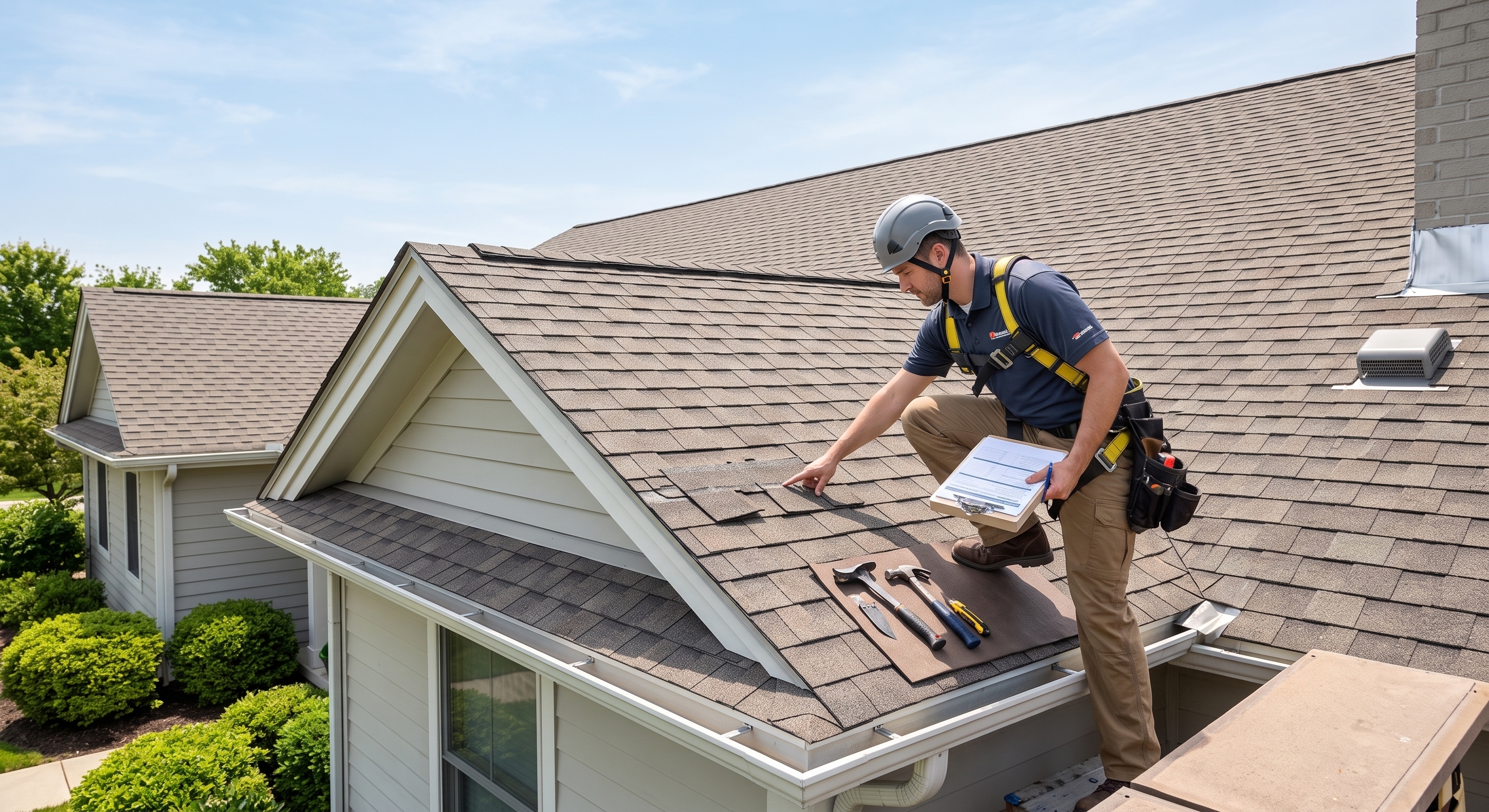
Before paying for a roof repair, it helps to understand what the job should reasonably cost. According to 2026 industry cost data, the national average roof repair runs approximately $1,150, with most homeowners paying between $400 and $1,900 depending on the type and extent of damage. Minor repairs often stay under $1,000, while major repairs involving structural damage or extensive leaks can reach $4,000 to $6,000 or more.
This assumes you’ve already confirmed where the roof is actually failing — if you’re still narrowing that down, start with diagnosing the problem. Knowing what affects the price can help you compare estimates and avoid paying for work you don’t need.
Typical Cost by Repair Type
Different repairs carry very different price tags. Based on 2026 national cost data:
| Repair Type | Typical Cost |
|---|---|
| Shingle replacement (small area) | $200 – $500 |
| Flashing repair (chimney, skylight, vent) | $200 – $850 |
| Leak repair (diagnosis + fix) | $150 – $1,550 |
| Valley or step flashing repair | $400 – $900 |
| Moderate repairs (multiple leaks, partial decking) | $1,000 – $3,000 |
| Major repairs (structural, extensive water damage) | $3,000 – $8,000+ |
These ranges are drawn from multiple 2026 industry cost guides (Angi, HomeGuide, This Old House, Cobex). Actual pricing depends heavily on your roofing material, roof pitch, accessibility, and local labor rates — treat this table as a starting point for conversations, not a quote.
Roof Repair Cost Estimator
Answer three quick questions to see a realistic cost range. This is a planning estimate, not a quote — always compare it against a real contractor bid.
Based on 2026 national cost data. Actual pricing depends on your location, contractor, and the roof’s specific condition — use this range to sanity-check a real quote, not replace one.
What Affects the Cost?
Roof repair costs depend on more than the visible problem. A small repair may be straightforward, while hidden damage can require additional labor or materials.
Consider:
- Type of damage — Leaks, damaged shingles, flashing problems, and structural issues can require different repairs, and cost accordingly.
- Roofing material — Asphalt shingle repairs typically run $4 to $8 per square foot installed. Metal and slate roofing materials are generally more expensive to repair than asphalt.
- Location on the roof — Flashing repairs around chimneys and skylights tend to cost more than simpler repairs, since they require more careful sealing work.
- Size of the repair — A small damaged area may cost much less than widespread deterioration.
- Roof access — Steep or difficult-to-access roofs can increase labor and safety costs.
- Underlying damage — Water damage or damaged decking may need to be repaired before the roof covering is replaced.
How Much Should You Budget?
There isn’t one price that applies to every roof repair. The right budget depends on what has failed and how much work is required to fix it properly.
Instead of focusing only on the total price, ask the contractor to explain what the estimate includes. A clear scope of work makes it easier to compare one quote with another.
Get More Than One Estimate
For a significant repair, consider getting two or three estimates when practical. Give each contractor the same information about the problem so you can compare similar scopes of work.
A much lower quote isn’t necessarily the better deal. It may exclude important materials, preparation, cleanup, or repairs that another contractor has included.
What Should Be Included?
A useful roof repair estimate should clearly describe the work being performed.
Look for details about:
- The location and cause of the problem
- Materials being replaced or repaired
- Labor
- Removal and disposal of damaged materials
- Any required flashing or waterproofing work
- Repairs to underlying decking or structure, if needed
- Cleanup
- Warranty or workmanship coverage
If the estimate is vague, ask for clarification before approving the work.
Repair or Replace the Roof?
A repair may make sense when the problem is limited and the rest of the roof is in reasonable condition.
Replacement may be worth considering when the roof is near the end of its expected life, damage is widespread, repairs are becoming frequent, or the existing roofing system is no longer providing reliable protection.
Don’t make the decision based only on the cost of today’s repair. Consider the roof’s age, condition, remaining life, and the likely cost of future repairs.
Watch for Red Flags
Be cautious when a contractor:
- Gives you a vague estimate without explaining the work
- Pressures you to approve the repair immediately
- Recommends a complete replacement without explaining why
- Can’t clearly identify the source of the problem
- Refuses to explain what is included in the price
- Offers a very low price that leaves out important work
A reputable professional should be willing to explain the problem and the recommended solution.
Ask These Questions Before Approving the Repair
Before agreeing to the work, ask:
- What exactly is damaged?
- What is causing the problem?
- How much of the roof needs to be repaired?
- What materials will be used?
- Does the price include labor and cleanup?
- Could there be hidden damage underneath?
- Is the repair expected to last?
- Is there a warranty on the work?
- Would repair still make sense given the age of the roof?
The answers can help you understand whether you’re paying for a necessary repair or a larger project than you actually need.
Consider the Long-Term Cost
The cheapest repair isn’t always the cheapest option over time. A temporary fix may make sense for a minor problem, but repeated repairs can become expensive if the roof is already approaching the end of its useful life.
Compare the repair cost with the roof’s age, condition, expected remaining life, and the potential cost of additional repairs.
Finish With the Next Step
Once you understand the damage, the recommended repair, and the full cost, compare your options before approving the work.
A reasonable roof repair should solve the actual problem, use appropriate materials, and provide value for the money. If the diagnosis or price is unclear, getting another estimate can help you make a more confident decision.

Leave a Reply