
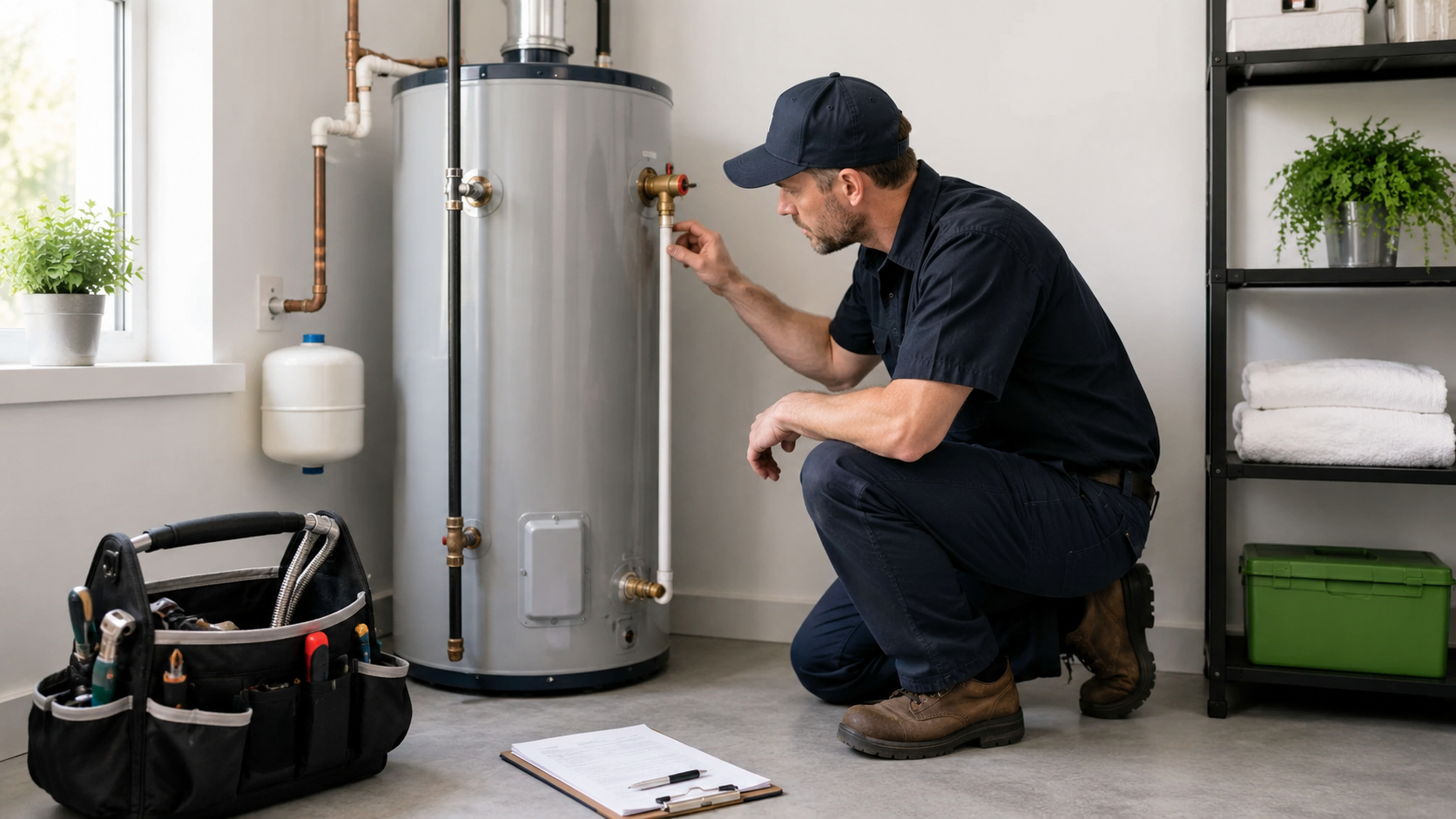
Replacing a water heater can be a significant home expense, but the total cost depends on more than the new unit itself. According to 2026 industry cost data, most homeowners pay between $1,200 and $4,500 installed, with the exact number depending heavily on whether you’re replacing like-for-like or upgrading to a different type of system. If you’re not yet sure replacement is the right move, see How Much Does Water Heater Repair Cost? first.
Typical Cost by Water Heater Type
Based on 2026 national cost data:
| Water Heater Type | Typical Installed Cost |
|---|---|
| Standard electric tank (40-50 gallon) | $800 – $1,600 |
| Standard gas tank (40-50 gallon) | $900 – $1,900 |
| Tankless electric | $1,400 – $3,000 |
| Tankless gas | $2,000 – $5,500 |
| Heat pump / hybrid | $1,800 – $4,500 |
These figures reflect a range across multiple 2026 industry sources (Angi, Modernize, and specialty plumbing cost guides). Tankless and heat pump systems cost considerably more upfront than a standard tank, but tank units generally last 8 to 12 years, while tankless systems can last 15 to 20 years, which changes the long-term math.
Water Heater Replacement Cost Estimator
Pick your system type to see a realistic installed cost range. This is a planning estimate, not a quote — always compare it against a real written estimate.
Switching types often requires code-related upgrades — expansion tank, new venting, or updated connections.
Based on 2026 national cost data. Actual pricing depends on your location, existing setup, and any required code upgrades — use this range to sanity-check a real quote, not replace one.
Watch for Code-Related Add-Ons
A straightforward swap can turn into a larger bill once code requirements are factored in. Depending on your location and existing setup, expect the possibility of $300 to $1,500 in additional code-required work, such as an expansion tank, a drip pan, updated discharge routing for the pressure relief valve, or seismic strapping in some regions. Ask your plumber directly: “Beyond the unit itself, what code upgrades does this specific installation require?”
Tax credits and rebates for water heaters — particularly heat pump models — have changed in recent years and continue to be updated. Check current IRS guidance and your local utility’s rebate programs before assuming a specific credit applies to your 2026 project.
What Affects Water Heater Replacement Cost?
The biggest cost differences usually come from the type and size of water heater being installed. Tank and tankless systems have different installation requirements, and electric and gas systems may require different connections or modifications. Access to the existing unit, local labor costs, permits, and disposal can also affect the total.
Tank vs. Tankless Water Heaters
Traditional tank water heaters store and heat a supply of water, while tankless systems heat water as it is needed. Tankless units can have higher upfront equipment and installation costs, but they may offer different efficiency and space-saving benefits. Compare the total installation cost and expected long-term value rather than focusing only on the purchase price. See Tank vs Tankless Water Heater for a fuller comparison before buying either type.
Does the Installation Need More Than a Simple Swap?
Some replacements are relatively straightforward, while others require changes to plumbing, electrical connections, venting, gas lines, drainage, or other components. Ask the installer whether the new system can use the existing connections or whether modifications will be necessary.
What Should a Replacement Estimate Include?
A useful estimate should clearly identify the water heater being installed and the work required to complete the replacement. Check whether the price includes removal and disposal of the old unit, installation, connections, permits, materials, startup and testing, and any required modifications.
Compare the Total Installed Cost
When comparing replacement estimates, look at the total installed price rather than the equipment price alone. Two water heaters with similar purchase prices can have very different installation costs. Make sure you’re comparing similar equipment, installation work, warranties, and included services.
How Much Does Removal and Disposal Cost?
Replacing a water heater usually involves removing the old unit, and some contractors include disposal in the installation price while others list it separately. Ask whether removal, hauling, and disposal are included so you know the actual total cost before approving the work.
Consider Energy Efficiency and Operating Cost
Don’t compare water heaters based only on the installation price. Consider expected energy use, maintenance, warranty coverage, and the expected lifespan of the system. A more efficient model may cost more upfront but could provide better value over time.
Repair or Replace?
If you’re replacing a water heater because of a problem, compare the replacement cost with the cost of repairing the existing system. A repair may make sense when the unit is relatively young and the problem is limited. Replacement may provide better value when the system is old, the tank is leaking, or repairs are becoming frequent. See Repair or Replace a Water Heater? for the fuller decision framework.
Questions to Ask Before Replacing Your Water Heater
- What type and size of water heater is recommended?
- Is removal and disposal included?
- Will existing plumbing, electrical, gas, and vent connections work?
- Are permits included?
- Are there additional installation costs?
- What warranty comes with the system?
- What warranty covers the installation?
- How much maintenance will the new system require?
Get More Than One Estimate
For a major replacement, getting two or three estimates can help you understand whether the price is reasonable. Give each contractor the same information and compare the complete installation cost, equipment, warranty, and included work — this is where knowing what to ask before hiring pays off.
Watch for Red Flags
- The estimate only gives you the price of the unit
- Installation costs aren’t clearly explained
- Required plumbing, electrical, gas, or venting work is excluded
- Removal and disposal aren’t mentioned
- You’re pressured to choose a system immediately
- The contractor won’t provide a written estimate
Finish With the Next Step
Before approving a water heater replacement, make sure you understand the total installed cost, what work is included, and what warranty you’ll receive. Compare estimates based on the complete project—not just the price of the new unit—and choose the option that provides the best long-term value.
Before You Fix, know the full installed cost before you approve a new water heater — the unit price is rarely the whole story.

Leave a Reply