
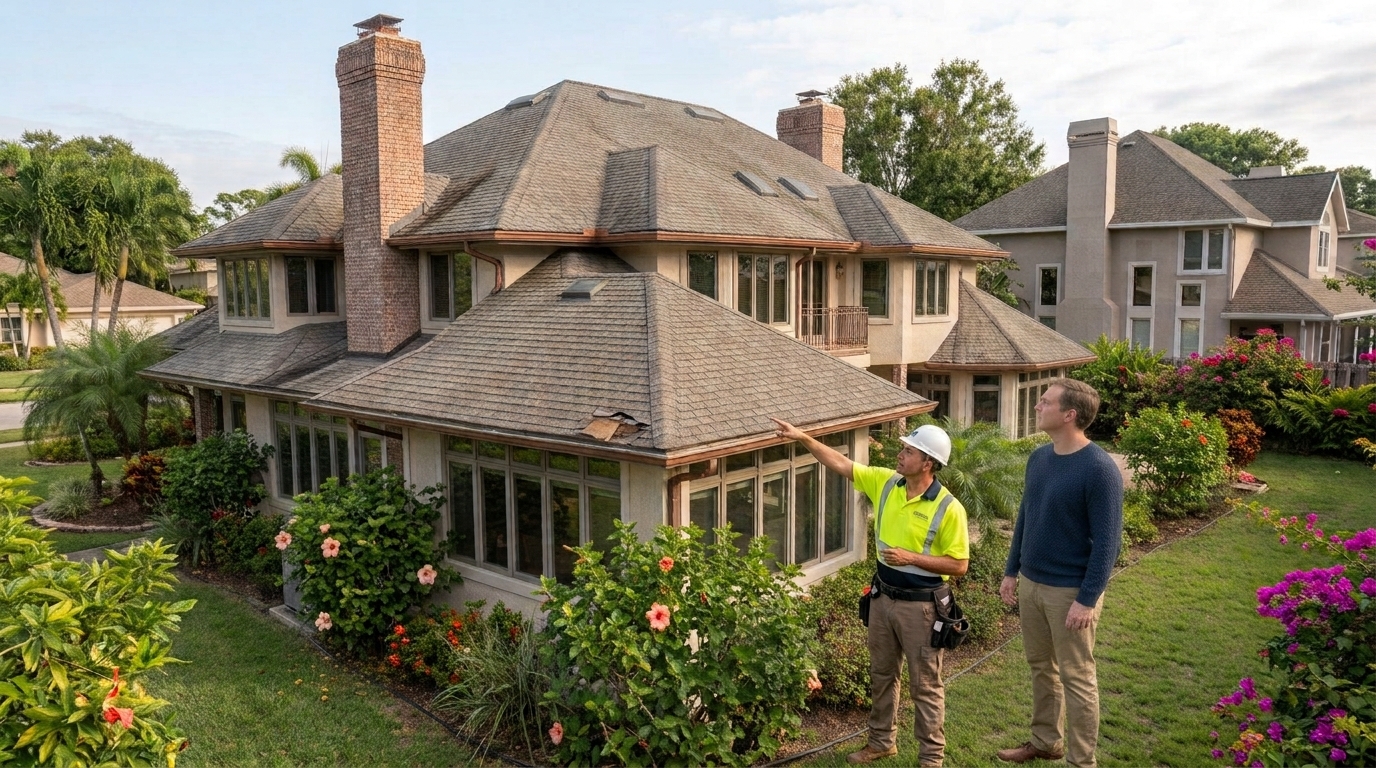
A leaking roof does not automatically mean you need a new roof.
In many cases, a leak can be repaired without replacing the entire roofing system. The key question is why the roof is leaking, how extensive the damage is, and what condition the rest of the roof is in.
A damaged shingle, failed flashing, or problem around a roof penetration may be a relatively localized repair.
But if the roof has widespread deterioration, repeated leaks, or significant underlying damage, replacement may eventually make more sense.
Here’s how to tell the difference.
A roof leak can sometimes be a simple repair
Some roof leaks come from a very specific problem.
For example:
- One or several damaged shingles
- Failed flashing
- A leaking pipe boot
- A problem around a roof vent
- Damaged sealant around a penetration
- A localized area of storm damage
If the surrounding roofing is in good condition, repairing the affected area may be all that’s necessary.
The important part is finding the actual source of the water.
1. Damaged shingles may be repairable
Individual asphalt shingles can become:
- Cracked
- Torn
- Lifted
- Missing
- Damaged by wind
- Damaged by falling branches
If the damage is limited to a small area, a roofer may be able to replace the affected shingles.
That doesn’t necessarily justify replacing the entire roof.
However, an older roof can present a complication: the original shingles may no longer be available.
A replacement shingle may be similar without being an exact visual match.
2. Flashing problems can often be repaired
Flashing protects vulnerable areas of a roof where water could otherwise enter.
It’s commonly found around:
- Chimneys
- Skylights
- Roof valleys
- Roof-to-wall intersections
- Vents
- Other roof penetrations
If flashing has deteriorated or been damaged, the repair may involve replacing or correcting the flashing rather than replacing the entire roof.
Again, the condition of the surrounding roof matters.
3. Roof vents can cause localized leaks
A damaged or improperly sealed roof vent can allow water into the roof system.
The solution may involve repairing or replacing the vent and correcting the surrounding weatherproofing.
If the rest of the roof is healthy, there may be no reason to replace everything.
4. Pipe boots can fail
Plumbing vent pipes pass through the roof.
The rubber or other sealing component around the pipe can deteriorate over time.
This can create a leak that appears inside the home near the plumbing vent.
Replacing the failed component may solve the problem.
The ceiling stain may remain until the interior damage is repaired, but that doesn’t necessarily mean the roof itself needs replacement.
5. Skylight leaks don’t always mean the skylight needs replacing
If water appears around a skylight, don’t immediately assume the skylight itself is defective.
The problem could involve:
- Flashing
- Roofing materials
- Sealants
- Installation
- The surrounding roof
A professional inspection can help determine the actual source.
How do you know whether the leak is localized?
A useful question to ask is:
“Is the damage limited to one area, or is the roof deteriorating more broadly?”
A localized leak on an otherwise healthy roof is much more likely to be a repair situation.
A roof with multiple damaged areas, widespread shingle deterioration, and recurring leaks is more likely to require larger-scale work.
Roof age matters
A leak on a relatively young roof can be very different from a leak on an aging roof.
Imagine two homes.
Home A
- Roof is 8 years old
- One damaged shingle
- No history of leaks
- Shingles otherwise look healthy
A localized repair could be a reasonable solution.
Home B
- Roof is 22 years old
- Multiple leaks
- Widespread curling shingles
- Significant granule loss
- Several previous repairs
Even if each individual leak can technically be repaired, continuing to patch the roof may no longer be the most sensible long-term choice.
The difference isn’t simply the leak.
It’s the condition of the entire roof.
What if the roof has multiple leaks?
Multiple leaks deserve a closer look.
They don’t automatically mean replacement.
For example, several leaks could result from a storm that damaged specific areas.
But if leaks are appearing in different locations over time, particularly on an older roof, that may indicate widespread deterioration.
Ask the roofer:
“Are these independent repairable problems, or are they symptoms of a roof that’s failing more generally?”
What if the roof has storm damage?
Storm damage can sometimes be repaired without replacing the entire roof.
The extent of the damage matters.
A professional may need to evaluate:
- Shingles
- Flashing
- Vents
- Gutters
- Roof decking
- Other roofing components
If damage is widespread, replacement may be more appropriate.
If it’s limited, repair may be sufficient.
What about damaged roof decking?
The visible shingles aren’t the entire roof system.
Underneath them is the roof deck, which provides the structural surface the roofing materials are installed over.
If a leak has caused localized damage to the decking, a roofer may be able to replace the affected section.
That doesn’t automatically mean the entire roof deck needs replacement.
But significant or widespread decking damage should be taken seriously.
Can you repair a roof from the inside?
Usually, the actual source of a roof leak needs to be addressed from the exterior.
You might temporarily contain water inside the home, but patching the ceiling doesn’t fix the roof.
For example:
Painting over a ceiling stain doesn’t stop the leak.
Replacing drywall doesn’t stop the leak.
Patching the visible interior damage doesn’t stop water from entering the roof.
The water-entry point needs to be addressed.
What if the leak stops?
Don’t assume the roof has fixed itself.
Some leaks only occur under certain combinations of:
- Heavy rain
- Wind direction
- Rainfall intensity
- Roof conditions
Water may also remain trapped in insulation or other materials after the visible dripping stops.
A recurring leak should still be investigated.
How much does a roof leak repair cost?
There isn’t one reliable price for every roof leak.
The cost depends on:
- Cause of the leak
- Roofing material
- Location
- Extent of damage
- Accessibility
- Labor
- Whether decking needs repair
- Whether additional components need replacement
A simple localized repair can be very different from a repair involving flashing, decking, or difficult-to-access areas.
If you’re comparing estimates, make sure you’re comparing the same scope of work.
What should a roof repair estimate include?
Before approving a repair, ask the contractor to explain:
- Where the leak is coming from
- What caused it
- What materials will be replaced
- Whether damaged decking is included
- Whether flashing is being repaired or replaced
- Labor
- Cleanup and disposal
- Warranty on the repair
- Total price
Don’t settle for an estimate that simply says:
“Fix roof leak — $___.”
You should understand what you’re paying for.
When does repair stop making sense?
There’s no universal dollar amount or percentage that automatically means you should replace a roof.
But replacement becomes more worth considering when you have a combination of:
- An older roof
- Widespread shingle deterioration
- Recurring leaks
- Multiple repairs
- Significant storm damage
- Damaged decking in multiple areas
- Deteriorated flashing throughout the roof
- Increasing repair costs
The question isn’t simply:
“Can this leak be repaired?”
Technically, many leaks can be repaired.
The better question is:
“Does repairing this leak make sense given the condition and remaining useful life of the entire roof?”
Beware of the “whole roof” recommendation
If a contractor tells you that you need a complete replacement, ask them to show you why.
Ask:
“Can you show me the areas that require replacement?”
Then ask:
“What would happen if we repaired the affected areas instead?”
You’re not necessarily challenging the contractor.
You’re trying to understand the decision.
A trustworthy roofing professional should be able to explain the reasoning behind a major recommendation.
But don’t assume every roofer recommending replacement is wrong
The opposite mistake is also possible.
Some homeowners hear “replacement” and assume the contractor is simply trying to sell them a bigger job.
Sometimes replacement really is the better option.
If a roof is severely deteriorated, repeatedly leaking, and approaching the end of its expected life, continuing to make small repairs may simply postpone a larger expense.
The goal isn’t to avoid replacement at all costs.
The goal is to replace only when replacement actually makes sense.
Get a second opinion for a major replacement
If you’re being told that a repair isn’t possible and you need a complete replacement, consider getting another qualified roofing professional to inspect the roof.
Ask both contractors the same questions.
Compare:
- Diagnosis
- Photos
- Scope of work
- Recommended materials
- Repair option
- Replacement option
- Warranty
- Total cost
You may discover that both contractors agree.
Or you may discover that their recommendations differ.
Either way, you’ll have more information before making a large financial decision.
Don’t ignore a repairable leak
Avoiding unnecessary replacement doesn’t mean ignoring a leak.
Even a small leak can allow moisture to enter the roof system and interior of the home.
If you know the roof is leaking, address it.
The question is how to address it.
The bottom line
Yes, a roof leak can often be repaired without replacing the entire roof.
A localized problem involving a damaged shingle, flashing, vent, pipe boot, or other component may be repairable.
But repair makes less sense when the roof has widespread deterioration, recurring leaks, extensive damage, or is already near the end of its useful life.
Before agreeing to a full replacement, ask:
“What exactly is wrong with the roof, and why isn’t a repair a reasonable option?”
Then ask the roofer to show you the evidence.
Before You Fix, don’t confuse “this roof has a leak” with “this roof needs to be replaced.”

Leave a Reply