
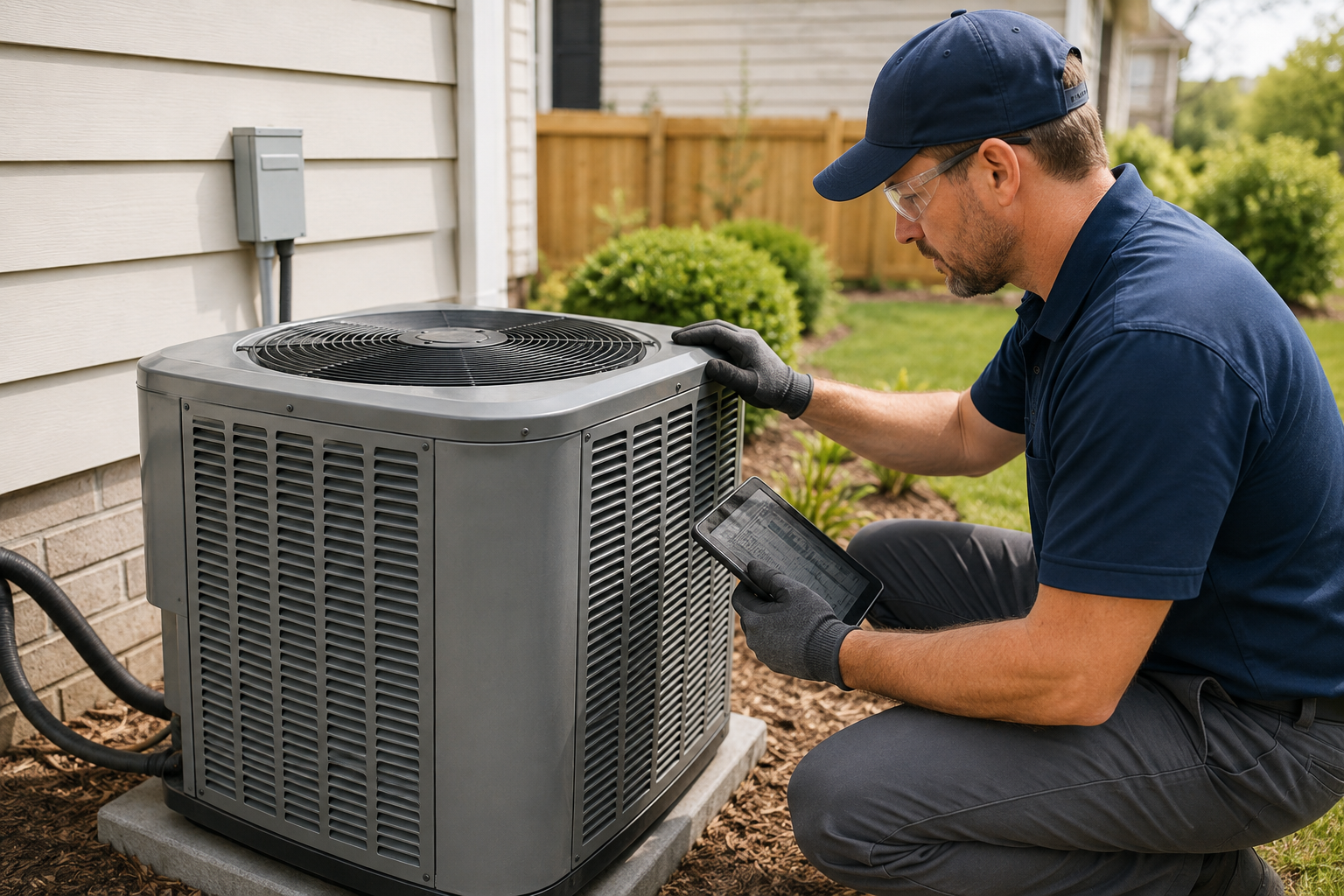
When your air conditioner stops working, the cheapest option isn’t always the best one.
A repair may get an older system running again, but if the equipment is losing efficiency, breaking down repeatedly, or approaching the end of its useful life, replacement may make more sense.
The right decision depends on more than the repair bill. The age of the system, its condition, repair history, energy use, refrigerant, and expected future costs all matter.
Here’s how to think through the decision before you spend money.
Repair usually makes more sense when:
- The system is relatively young.
- The problem is isolated and straightforward.
- The repair cost is reasonable compared with replacement.
- The system has been reliable.
- Your home is still comfortable when the system is operating.
- There are no major signs of declining efficiency or repeated failures.
A good repair can extend the useful life of an otherwise healthy air conditioner.
Replacement starts to make more sense when:
- The system is more than about 10 years old.
- You are making frequent repairs.
- Repair costs are becoming significant.
- Your energy bills are increasing without a clear explanation.
- Some rooms are consistently too hot or too cold.
- The system struggles to keep up with demand.
- You are dealing with an older refrigerant or equipment that is becoming harder to service.
ENERGY STAR recommends considering replacement when an air conditioner or heat pump is more than 10 years old, particularly when it needs frequent repairs or energy bills are increasing.
Don’t make the decision based on the repair price alone
Suppose a contractor gives you a $700 repair estimate.
That doesn’t automatically mean you should repair the system.
Ask:
How old is the AC?
A $700 repair on a five-year-old system can be very different from a $700 repair on a 15-year-old system.
What failed?
A relatively minor component replacement is different from a major compressor or other expensive component.
What else is likely to fail?
If several major components are already showing signs of wear, today’s repair may not be the last expense.
How efficiently is the system operating?
An older system may continue working while consuming more energy and providing less consistent comfort.
What about refrigerant?
Refrigerant can complicate the repair-versus-replacement decision.
Older systems may use refrigerants that are being phased out or becoming less practical to service. That doesn’t necessarily mean an existing system has to be replaced immediately.
For example, EPA states that homeowners can continue to repair existing systems using legacy refrigerants, although new-system requirements are changing.
So don’t let someone tell you “that refrigerant is being phased out, so you have to replace your AC” without explaining exactly what applies to your equipment.
Ask the contractor:
What refrigerant does my system use?
Is the refrigerant currently available?
Is the problem actually related to the refrigerant?
How much would the repair cost?
If I replace the system, what refrigerant would the new system use?
A simple way to compare repair vs. replacement
Before making a decision, compare the two options side by side.
| Question | Repair | Replace |
|---|---|---|
| Up-front cost | Lower | Higher |
| Expected remaining life | Depends on system | Usually longer |
| Efficiency | Keeps existing equipment | Potentially better |
| Risk of another repair | Depends on age/condition | Generally lower initially |
| Comfort | May improve | Opportunity to address system issues |
| Long-term cost | Can be higher on an aging system | Higher initial investment |
The important question isn’t:
“Which option costs less today?”
It’s:
“Which option makes more financial sense over the next several years?”
Don’t overlook the rest of the system
Sometimes an AC problem isn’t really an AC-equipment problem.
Poor insulation, air leaks, duct problems, inadequate airflow, or an improperly sized system can affect comfort and energy use.
ENERGY STAR specifically notes that rooms that are too hot or cold can be caused by equipment problems, duct problems, or inadequate insulation and air sealing.
So before replacing an expensive piece of equipment, make sure the contractor has identified why the existing system isn’t performing properly.
What should you ask the HVAC contractor?
Before approving either a repair or replacement, ask:
- What exactly failed?
- What caused the failure?
- How old is my system?
- What refrigerant does it use?
- What is the total repair cost?
- Are there other components showing signs of failure?
- How long do you reasonably expect the system to last after this repair?
- What would replacement cost?
- What efficiency rating would the replacement have?
- What would you recommend if this were your home—and why?
That last question is useful, but don’t stop there. Ask them to explain the reasoning rather than simply accepting the recommendation.
The Bottom Line
Repair your AC when the system is relatively young, the problem is limited, and the repair is reasonable for the condition of the equipment.
Consider replacement when the system is older, repairs are becoming frequent or expensive, efficiency is declining, or several major problems are appearing at once.
You don’t have to decide based on a contractor’s recommendation alone.
Understand the problem. Compare the numbers. Consider the age and condition of the system. Then decide.
That’s the Before You Fix approach.

Leave a Reply