
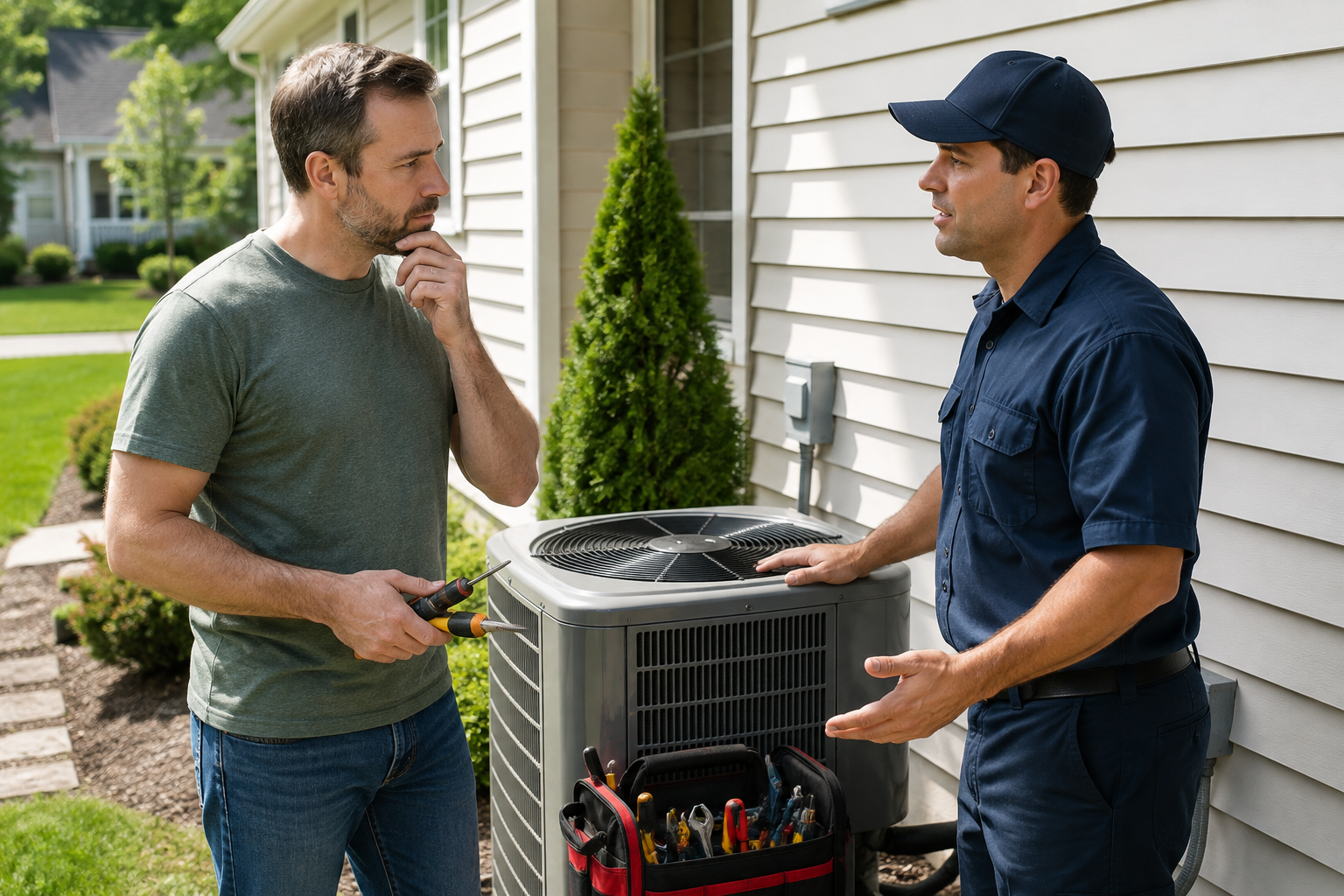
When something breaks in your home, the first question isn’t always “How much will it cost?” Sometimes it’s “Should I fix this myself or hire a professional?”
DIY can save money when the job is simple and you have the right skills and tools. But some repairs become more expensive when a mistake creates additional damage—or when safety, permits, or specialized equipment are involved.
The right choice depends on the type of repair, your experience, the potential consequences of getting it wrong, and the cost of professional help.
Here’s how to decide before you pick up a tool.
DIY usually makes more sense when:
- The repair is simple and well understood.
- You have the necessary tools.
- The work does not involve significant safety risks.
- You can follow reliable instructions.
- A mistake would be relatively inexpensive to correct.
- The repair does not require specialized equipment or licensing.
- You have enough time to do the job carefully.
Examples might include replacing an air filter, tightening a loose connection, replacing a simple fixture, patching a small drywall hole, or performing basic maintenance.
The key is knowing the difference between “I can probably do this” and “I understand exactly what I’m doing.”
Hiring a professional makes more sense when:
Some repairs are better left to someone with the proper training, tools, and experience.
Consider hiring a professional when:
- The repair involves electricity or gas.
- The job involves refrigerant or HVAC equipment.
- A plumbing problem could cause significant water damage.
- The work affects the structure of your home.
- Specialized tools or diagnostic equipment are required.
- A mistake could create a serious safety problem.
- Local codes or permits may apply.
- You cannot confidently identify the cause of the problem.
The cheapest option upfront isn’t necessarily the cheapest option overall.
A professional may cost more initially, but the additional cost can be worthwhile when the repair requires expertise or carries a high risk of failure.
Ask yourself these five questions
Before deciding, walk through these questions:
1. Do I know exactly what is wrong?
If you aren’t sure what caused the problem, be careful about starting a repair.
Replacing a failed component without understanding why it failed can result in the same problem happening again.
2. Do I know how to fix it?
Watching a short video is not the same as having the knowledge and experience to complete the repair safely.
If the repair involves unfamiliar equipment or procedures, getting professional help may be the smarter choice.
3. What happens if I make a mistake?
This is one of the most important questions.
A mistake while painting a wall is very different from a mistake involving electrical wiring, a gas line, a roof, or an HVAC system.
The greater the potential damage, the more valuable professional expertise becomes.
4. How much will DIY actually cost?
Don’t compare DIY material cost with the contractor’s entire invoice.
Include:
- Tools you need to buy or rent
- Materials
- Replacement parts
- Your time
- Disposal costs
- Possible mistakes
- Any follow-up repairs
Sometimes the difference between DIY and professional work is smaller than it initially appears.
5. Is the job worth my time?
Your time has value.
A repair that takes a professional two hours might take an inexperienced homeowner an entire weekend.
If the job is difficult, frustrating, or likely to require multiple attempts, hiring someone may be the better use of your time.
A simple way to decide
Think of the decision this way:
Low risk + simple repair + enough skill = DIY may make sense.
High risk + specialized work + limited experience = hire a professional.
There is also a middle ground.
You can diagnose the basic problem yourself, research typical costs, and get several professional estimates before deciding what to do.
That gives you information without requiring you to perform the repair yourself.
When getting an estimate is the smart move
You don’t have to decide between DIY and hiring someone before you know what professional help will cost.
For larger repairs, get an estimate.
Ask the professional:
- What exactly needs to be repaired?
- What caused the problem?
- What parts are being replaced?
- Is there anything else that should be addressed?
- How long should the repair take?
- Is the work covered by a warranty?
- Are permits required?
A clear estimate gives you something concrete to compare against the cost and effort of doing the work yourself.
The bottom line
DIY isn’t automatically cheaper, and hiring a professional isn’t automatically better.
The right choice depends on risk, skill, cost, time, and the consequences of getting the job wrong.
If the repair is straightforward and low-risk, doing it yourself can be a smart way to save money.
If the repair involves significant safety concerns, specialized equipment, or expensive consequences, professional help may be worth the cost.
Before you fix it, decide whether you’re actually the right person to fix it.

Leave a Reply