
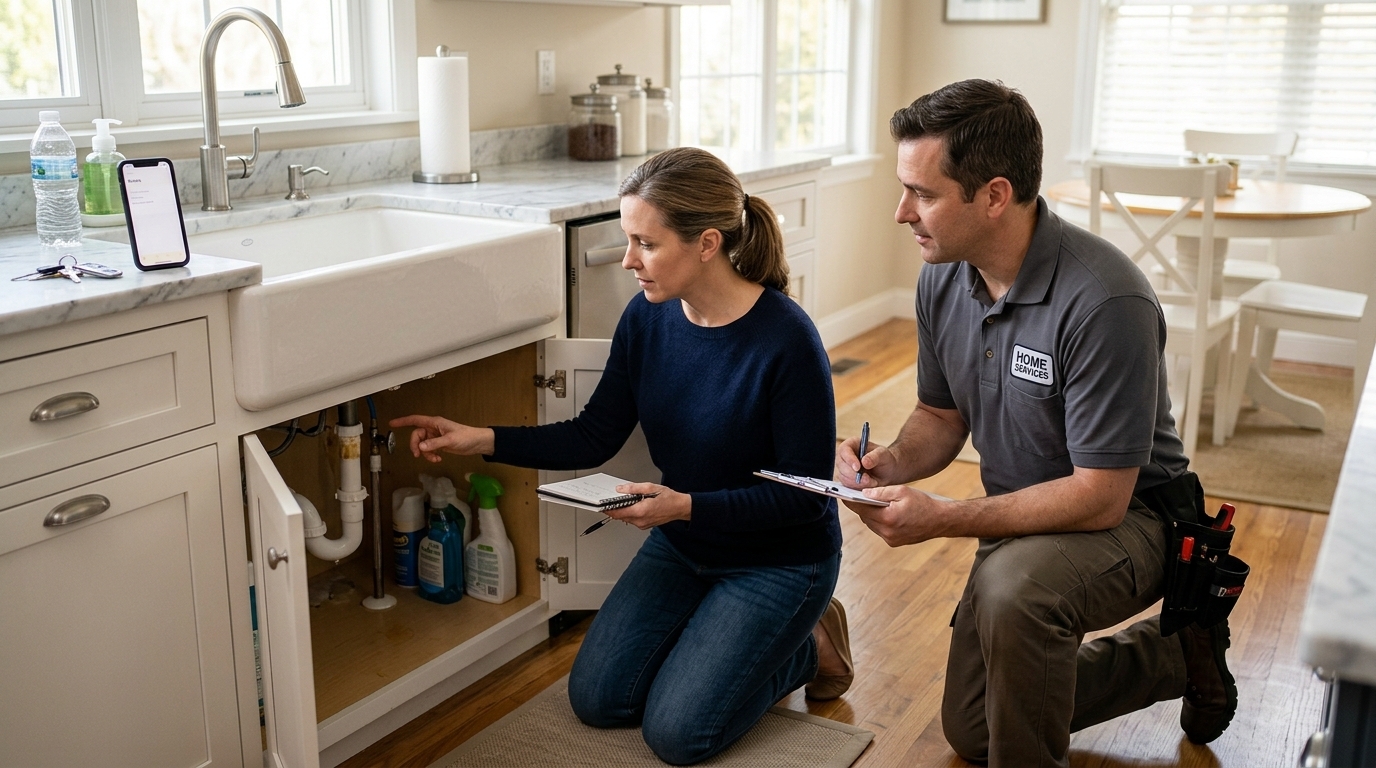
Not every home problem needs to be fixed today.
That can be difficult to remember when something in your house isn’t working the way it should. A strange noise, a small leak, a cracked tile, or an aging appliance can make you wonder whether you need to call someone immediately.
Sometimes you do.
But sometimes waiting is the smarter decision.
The key is knowing the difference between a problem that is unsafe or getting worse and one that can be monitored while you plan and budget for the repair.
Start with one question: Is anyone in danger?
Safety comes first.
If a problem creates an immediate risk of fire, electrocution, gas exposure, structural failure, or serious injury, don’t put off getting professional help.
Examples include:
- Smoke or burning smells
- Sparks or exposed electrical wiring
- A suspected gas leak
- Major water leaking near electrical equipment
- A severely damaged roof or structure
- A broken component that could fall
- A heating or cooling problem creating unsafe indoor conditions
These situations shouldn’t be treated as ordinary maintenance.
If there is an immediate danger, get people to a safe location and contact the appropriate emergency or qualified professional service.
Is the problem getting worse?
A small problem isn’t necessarily a harmless problem.
Ask yourself:
Has the problem changed noticeably over the last few days or weeks?
For example, a small ceiling stain that hasn’t changed may be something you can investigate and schedule.
A ceiling stain that is growing after every rainstorm is different.
Likewise, a dripping faucet may be annoying, while a pipe that is slowly leaking inside a wall could eventually cause significant damage.
The rate at which a problem is changing can tell you a lot about how urgently it needs attention.
Could waiting make the repair much more expensive?
This is one of the most important questions homeowners can ask.
Some repairs become more expensive when ignored.
A small roof leak can eventually damage:
- Roofing materials
- Underlayment
- Wood decking
- Insulation
- Ceilings
- Walls
A minor plumbing leak can eventually contribute to water damage, mold growth, or damaged building materials.
A small HVAC problem may sometimes develop into a larger equipment failure if the system continues operating under abnormal conditions.
You don’t necessarily need an emergency repair.
But you may need to schedule the repair before the small problem becomes a big one.
Is the problem affecting something else?
Consider whether the problem is isolated or causing other parts of the home to malfunction.
For example:
A slow drain may be manageable for a while.
But if multiple drains are backing up, the problem could be more significant.
An appliance making an unusual noise may continue working.
But if the noise is accompanied by overheating, leaking, electrical problems, or a burning smell, waiting becomes harder to justify.
A single symptom is one thing.
A combination of symptoms can change the situation.
Can you safely monitor it?
Some problems can reasonably be watched for a period of time.
For example, you might monitor:
- A minor cosmetic crack
- A small area of worn caulking
- A slowly deteriorating finish
- A nonessential appliance with a minor issue
- A small drip that has been safely contained while awaiting repair
The important word is safely.
Monitoring doesn’t mean ignoring the problem indefinitely.
It means you’ve determined that the situation isn’t currently dangerous or causing significant damage, and you’re keeping an eye on it.
What happens if the system stops working completely?
Think about the consequences of a complete failure.
If your second refrigerator develops a minor problem, you may have time to plan.
If your only refrigerator is becoming unreliable, the urgency is different.
If one bathroom has a minor issue but you have another functioning bathroom, you may have more flexibility.
If your only toilet stops working, you have a much more immediate problem.
The importance of a repair depends partly on how much the failure affects your ability to live safely and normally in the home.
Consider the season
Timing matters.
A minor heating problem in mild weather may be manageable.
The same problem during a freezing spell can become urgent.
A small roof issue before a period of heavy rain deserves more attention than the same issue during a long stretch of dry weather.
Likewise, an aging air conditioner may be easier to evaluate before the hottest part of the season rather than after it fails during extreme heat.
Sometimes the smartest repair decision is simply:
Fix it before you need it.
Don’t confuse inconvenience with an emergency
Some home problems are frustrating without being dangerous.
A squeaky door, cosmetic wall damage, worn cabinet hardware, or an outdated fixture may bother you every day.
That doesn’t necessarily mean it belongs at the top of your repair list.
If your budget is limited, separate:
“I don’t like this.”
from:
“This needs immediate attention.”
That distinction can help prevent spending money on low-priority improvements while more important problems remain unresolved.
Get an estimate before deciding
If you’re unsure whether a repair can wait, getting an evaluation can give you useful information.
You don’t necessarily have to authorize the work immediately.
Ask the professional:
- What exactly is wrong?
- Is it unsafe?
- Is the problem getting worse?
- What happens if I wait?
- How long could it reasonably wait?
- What would the repair cost now?
- Could waiting make the repair more expensive?
These questions turn uncertainty into information.
Create three levels of urgency
A simple way to organize home repairs is to put them into three groups.
Fix Now
These are problems involving immediate safety risks or significant active damage.
Examples might include:
- Major water leaks
- Gas leaks
- Electrical hazards
- Serious structural problems
- Active roof leaks causing significant interior damage
Fix Soon
These aren’t necessarily emergencies, but delaying them could increase the eventual cost or risk.
Examples might include:
- A worsening plumbing leak
- A deteriorating roof
- An HVAC system showing repeated warning signs
- A failing water heater
- Electrical problems that aren’t immediately dangerous but require professional evaluation
Monitor and Plan
These are problems that aren’t currently creating meaningful safety risks or damage.
Examples might include:
- Cosmetic damage
- Minor wear
- Nonessential improvements
- Small issues that remain stable
This category is where budgeting can make the biggest difference.
Your budget matters too
A homeowner doesn’t always have enough money to fix everything at once.
That’s normal.
If you’re facing several repairs, prioritize based on:
- Safety
- Preventing additional damage
- Keeping essential systems working
- Potential cost of delaying
- Comfort and convenience
- Cosmetic improvements
This approach helps you spend limited money where it matters most.
Don’t let a contractor’s urgency make the decision for you
A professional may recommend immediate work.
Sometimes that recommendation is completely justified.
But you should still understand why.
Ask for an explanation of the risk and what could happen if you wait.
A useful professional should be able to distinguish between:
“This is dangerous and needs attention now.”
and:
“This component is aging and we recommend replacing it.”
Those aren’t necessarily the same thing.
When waiting is actually the smart choice
Waiting can be reasonable when:
- The problem is not dangerous.
- It isn’t causing active damage.
- It isn’t rapidly getting worse.
- The system is still functioning adequately.
- You have a reasonable monitoring plan.
- You have time to compare repair options.
- Waiting won’t significantly increase the eventual cost.
In these situations, taking your time can actually lead to a better decision.
You can get multiple estimates, research the repair, compare repair versus replacement, and budget appropriately.
The bottom line
Knowing when a home repair can wait isn’t about ignoring problems.
It’s about understanding urgency.
If there’s an immediate safety risk or active damage, act quickly.
If the problem is getting worse or could become significantly more expensive, schedule the repair before it reaches that point.
And if the issue is stable, safe, and primarily cosmetic or inconvenient, you may have time to monitor it and plan.
The goal isn’t to fix everything immediately.
The goal is to fix the right things at the right time.
Before You Fix, know whether you need to act now—or whether you have time to make a smarter decision.

Leave a Reply