
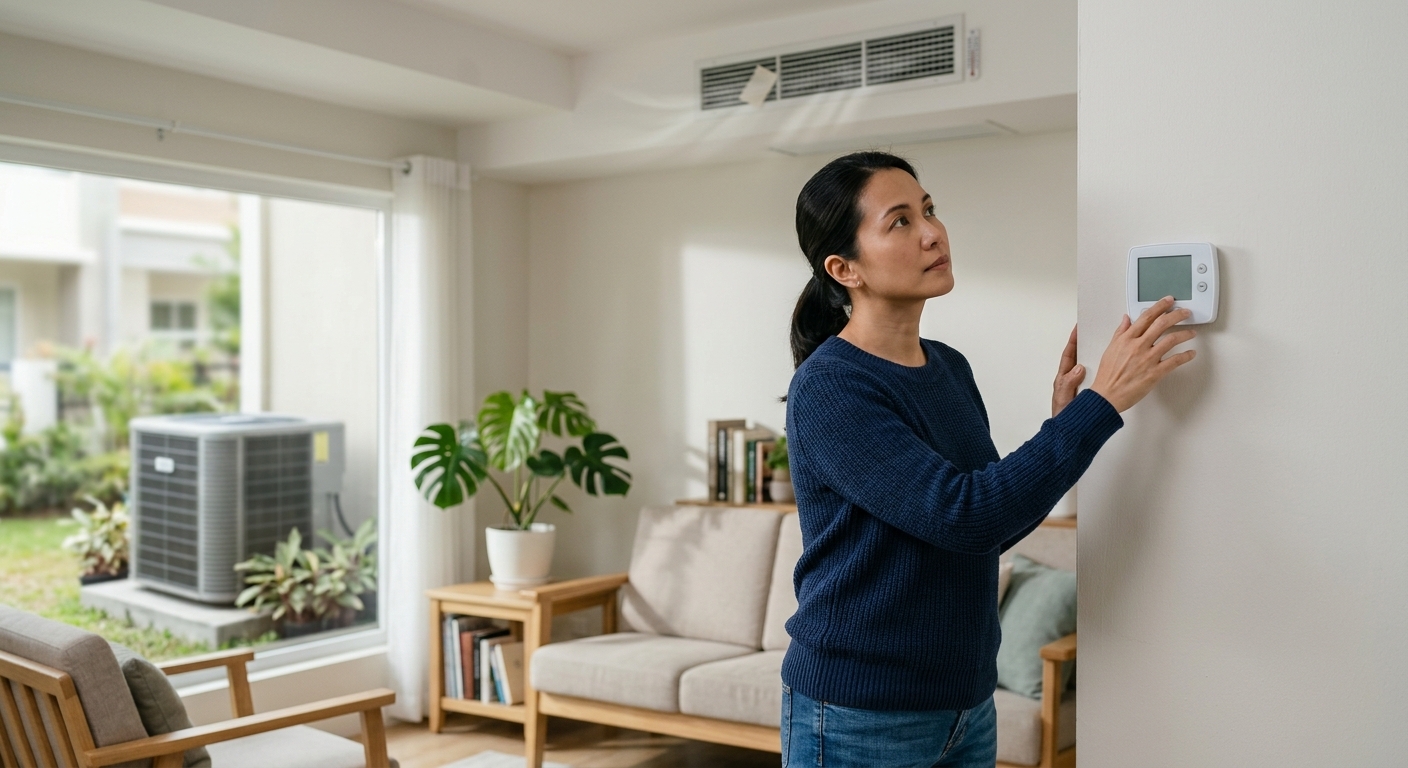
If your air conditioner keeps turning on and off in short intervals, it may seem like the system is working normally.
It isn’t always.
An AC that starts, runs briefly, shuts off, and then starts again soon afterward may be short cycling. Occasional cycling is normal, but frequent short cycles can increase wear, reduce comfort, and sometimes indicate an underlying problem.
Here’s what to check before assuming you need an expensive repair.
What is short cycling?
An air conditioner normally runs long enough to remove heat and humidity from your home before shutting off.
Short cycling happens when the system turns off before completing a normal cooling cycle and then starts again relatively soon afterward.
There isn’t one universal number of minutes that defines short cycling.
What’s more important is the pattern.
If your AC repeatedly starts and stops without adequately cooling the home, something may be wrong.
Start with the thermostat
Check your thermostat first.
Make sure:
- It’s set to Cool
- The temperature setting is appropriate
- The fan setting is configured as intended
- The thermostat has adequate power
- The thermostat isn’t located somewhere unusually warm or exposed to direct sunlight
A thermostat that is reading the wrong temperature can cause the system to cycle differently than expected.
If you recently changed the thermostat or its location, mention that to an HVAC professional if the problem continues.
Check the air filter
A dirty filter can restrict airflow.
Restricted airflow can affect system performance and may contribute to freezing or other problems that cause the AC to shut down.
Check the filter.
If it’s visibly dirty and due for replacement, replace it with the correct size and type for your system.
Don’t assume that the most restrictive filter is automatically the best choice.
The HVAC system needs adequate airflow to operate properly.
Check the vents and return grilles
Make sure supply vents are open and return-air grilles aren’t blocked.
Furniture, curtains, rugs, or other objects can restrict airflow.
If airflow has become noticeably weaker throughout the house, that’s useful information.
If only one room has an airflow problem, the cause may be different from a system-wide problem.
Check whether the AC is actually reaching the thermostat setting
Pay attention to what happens during a cycle.
Does the AC:
- Run for only a few minutes?
- Shut off before the home reaches the set temperature?
- Restart shortly afterward?
- Run normally but cycle more frequently than it used to?
- Struggle to cool the home?
These details help distinguish normal operation from a potential problem.
Consider whether the system is oversized
An oversized air conditioner can cool a home very quickly.
That might sound like a good thing.
But an AC that cools the space too quickly may shut off before running long enough to properly remove humidity.
This can lead to:
- Frequent cycling
- Higher indoor humidity
- Uneven comfort
- More noticeable temperature swings
If the problem has existed since the system was installed, improper sizing is worth discussing with an HVAC professional.
Check for ice
If the system is short cycling and you’ve also noticed ice on the refrigerant line or indoor coil, turn off cooling and allow the system to thaw.
A frozen system can result from restricted airflow, low refrigerant, dirty components, or other problems.
Don’t keep restarting a system that repeatedly freezes.
If freezing continues after basic airflow checks, have it professionally diagnosed.
Consider the outdoor temperature
Air conditioners don’t operate identically under every outdoor condition.
If you’re running the AC during unusually cool weather, cycling behavior may be different.
Consider whether the short cycling happens only under unusual weather conditions or during normal cooling conditions.
A problem that consistently occurs during hot weather is more significant than an occasional unusual cycle during mild conditions.
Check whether the outdoor unit is operating normally
When the AC starts, listen for the outdoor condenser.
Does it start normally?
Does the fan run?
Does the system make unusual noises?
If the indoor blower runs but the outdoor unit doesn’t operate correctly, there may be an electrical or mechanical problem.
Don’t remove the electrical panels or attempt to repair the condenser yourself.
HVAC equipment can contain dangerous electrical components.
Look for other symptoms
Short cycling is more useful as a diagnostic clue when combined with other symptoms.
Pay attention to:
- Warm air
- Weak airflow
- Ice
- Water leaks
- Unusual noises
- Electrical odors
- Higher-than-normal energy use
- Poor humidity control
- Frequent thermostat adjustments
Write down what you notice.
A technician can use these details to narrow down possible causes.
Check whether the problem is new
Think about when the cycling problem started.
If the AC has always behaved this way, possible causes include system sizing, thermostat location, installation, or another long-standing issue.
If the system previously operated normally and suddenly began short cycling, a new mechanical, electrical, airflow, or control problem may be more likely.
The timing matters.
Don’t immediately blame the thermostat
A faulty thermostat can cause abnormal cycling.
But replacing the thermostat isn’t automatically the solution.
Other issues can produce similar symptoms.
For example:
- Dirty filters
- Airflow restrictions
- Frozen coils
- Refrigerant problems
- Electrical issues
- Compressor problems
- Oversized equipment
- Safety controls
It’s better to diagnose the cause than replace parts based on guesswork.
When should you call an HVAC professional?
Have the system professionally inspected if:
- The AC repeatedly short cycles
- The problem suddenly appeared
- The system isn’t cooling properly
- You see ice
- You notice water leaks
- The outdoor unit isn’t operating normally
- A circuit breaker repeatedly trips
- You hear unusual mechanical noises
- You smell burning or electrical odors
- Basic checks don’t resolve the problem
If you see smoke, exposed wiring, or another immediate electrical hazard, turn the system off and address the safety issue rather than continuing to troubleshoot it.
Can short cycling damage your AC?
Repeated starts and stops can put additional stress on the system.
Frequent cycling may contribute to:
- Increased component wear
- Reduced efficiency
- Poor humidity control
- Uneven comfort
- Higher operating costs
The exact consequences depend on what’s causing the cycling and how frequently it occurs.
That’s why persistent short cycling is worth investigating rather than simply accepting as normal.
Repair or replacement?
Short cycling doesn’t automatically mean your AC needs to be replaced.
A relatively simple issue such as a dirty filter, airflow restriction, or control problem may be repairable.
If the system is older and has multiple expensive problems, replacement may eventually make more sense.
If an oversized system is the underlying issue, replacing it with properly sized equipment may be worth discussing.
Before approving major work, ask:
“What is causing the short cycling?”
Then ask:
“Is this repair reasonable for the age and condition of the system?”
These questions help you make a decision based on the actual condition of the equipment.
The bottom line
An air conditioner that occasionally turns on and off can be normal.
But if it repeatedly starts, runs briefly, shuts down, and restarts without adequately cooling your home, it may be short cycling.
Start with the simple checks:
Thermostat → filter → vents → airflow → ice → outdoor unit
If the problem continues, don’t guess at expensive repairs.
Have the system diagnosed and find out why it’s cycling so frequently.
Before You Fix, understand what’s causing the short cycling before replacing parts—or the entire AC system.

Leave a Reply